Understanding the Hidden Reasons Your Website Isn’t Ranking
Millions of websites confronted the issue of not appearing in Google’s ranking in 2026, and perhaps your site is among them. Understanding why your website is not ranking on Google requires looking beyond surface-level SEO mistakes. Understanding this issue requires a deeper look beyond the obvious SEO mistakes, because the real problems often lie beneath the surface. For example, a mismatch in search intent, content structure problems, weak engagement signals, and poor topical authority are often the main reasons that go unnoticed.
One shortcoming with existing search trends and keyword volatility is that Google tends to change its algorithm without any warning. Changes are typically based on enhancing user satisfaction by identifying the most relevant results for a given query.
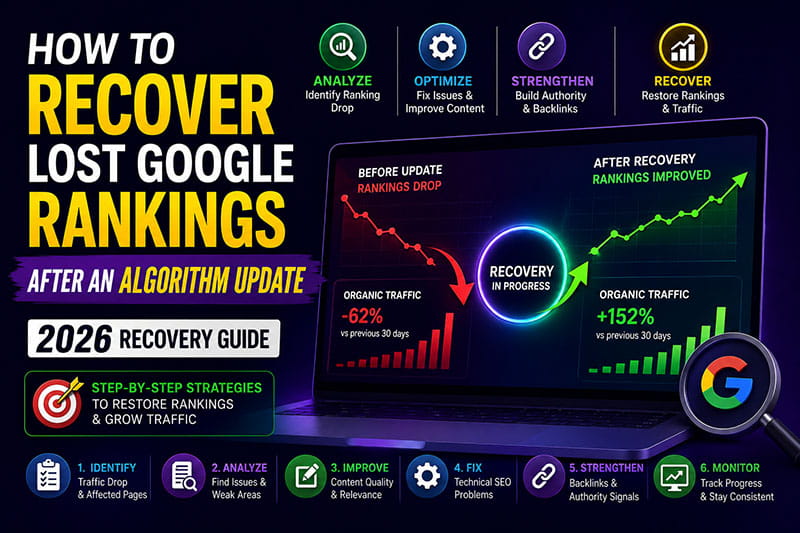
Today, Google evaluates websites holistically, considering technical performance, topical authority, trust signals, and content relevance. By addressing these hidden issues, you can implement a targeted plan to improve your rankings and drive traffic sustainably. For a detailed step-by-step approach to resolving these issues, see our SEO recovery guide: How to Fix Website Ranking Problems in 2026.
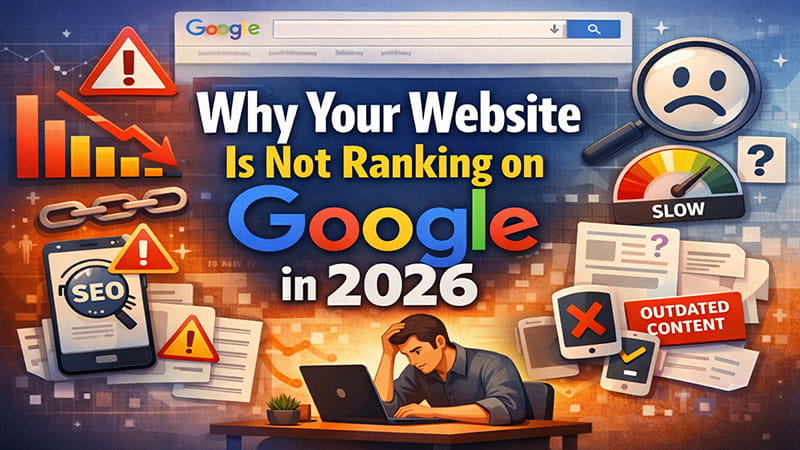
If your website is not ranking on Google in 2026, the most common reasons include search intent mismatch, weak topical authority, content structure problems, slow website speed, poor mobile usability, weak engagement signals, missing trust signals, and outdated content. Google now evaluates websites holistically, meaning rankings depend not only on keywords but also on technical performance, semantic relevance, and user experience. Identifying these issues early and fixing them with structured SEO improvements can significantly improve visibility and search performance over time.
Your Website Is Indexed: But Google Doesn’t Fully Understand It
Being indexed by Google is not a ticket to a high ranking right away. Google must understand the purpose and relevance of each page. A lot of websites suffer from not matching the search intent mismatch as their content does not fully meet what the users are trying to find.
Say there is a blog post on “website SEO audit” may provide a deep guide, but users might actually want quick actionable tips. This disconnect tells Google that the page is of less relevance and the possibility of its ranking drops.
If you don’t organize your Content structure problems, for example, not using headings, making only a few internal links, or having poorly arranged sections, these factors can also confuse search engines and add to your overall difficulty in SEO visibility.
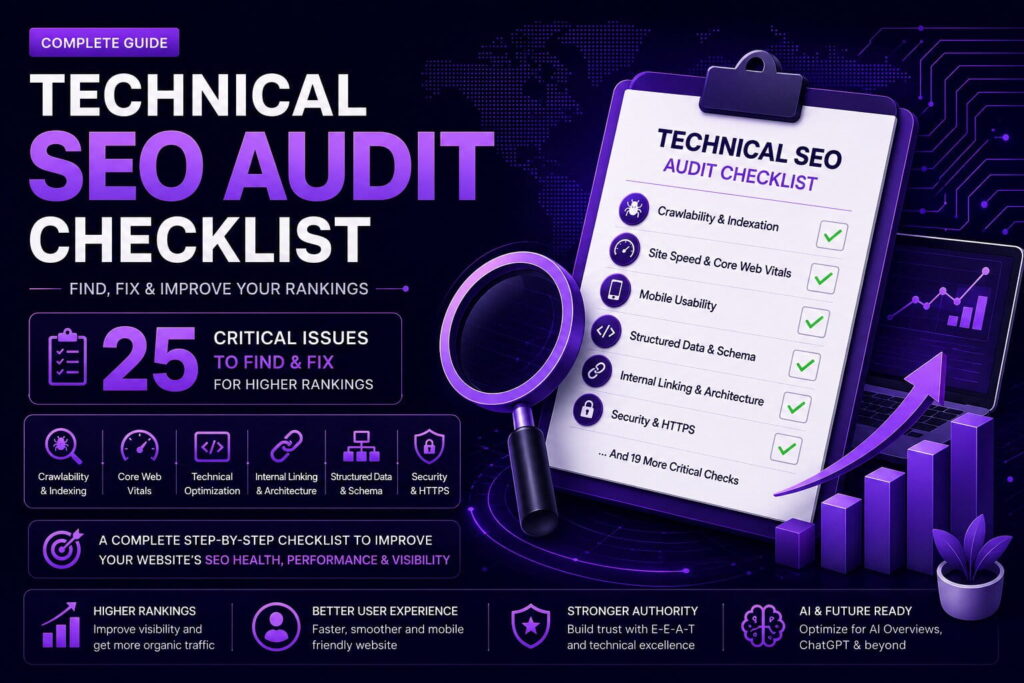
You can find out why your website is not ranking by performing a complete SEO audit, checking indexing status, reviewing technical performance, analyzing content depth, and monitoring engagement signals such as bounce rate and click-through rate. Tools like Google Search Console help identify visibility problems and keyword performance gaps.
Content Looks Good: But Depth and Relevance Matter
Producing great content shouldn’t be the only factor that you consider. Google looks at depth and relevance as well. Pages with low content depth, those that don’t have enough examples, case studies, or actionable insights, are often unable to win against competitors who thoroughly cover the topic.
It is quite possible for an excellently written text not to bring the expected results if only a surface-level approach is addressed. For example, two websites offering “SEO tips for small businesses” can be polar opposites: one providing thorough step-by-step explanations with visuals and FAQs, and the other only giving a brief summary. As expected, the deeper, more actionable content will win due to the semantic relevance and better engagement signal.
Weak Topical Authority Limits Your Potential
Google ranks websites not only through the quality of individual pages, but also by the overall authority a site has on a certain topic. Sites with scattered content often suffer from topical authority problems, which can limit ranking potential even when pages are high-quality.
Strong internal linking not only benefits visitors by making it easier for them to find the information they are looking for but also forms the backbone of a powerful website in terms of topical authority. Linking related content under pillar topics on your website helps your SEO drastically. Not having this in place keeps your website less competitive in search results, thereby limiting SEO visibility.
Technical Performance Problems Can Block Visibility
Technical Performance Problems May Completely Block Visibility
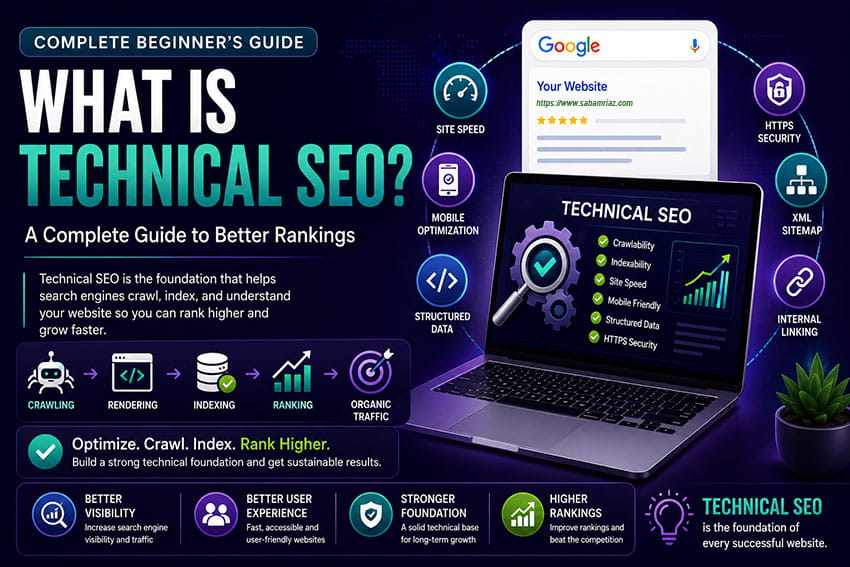
Your website can be totally prevented from appearing in search results by technical problems, even if you have great content. If your website is slow and difficult for users to use on mobile, these issues will probably deteriorate the user experience, resulting in lower engagement signals to Google.
Other factors that prevent crawl efficiency and page performance are broken links, missing structured data, and unoptimized images. The Core Web Vitals, which measure the page’s load speed, interactivity, and layout stability, are significant ranking factors as of 2026. If you keep ignoring them, your search visibility will slowly decline.
Weak Engagement Signals Lower Google’s Confidence
Google takes into account various user behavior signals like dwell time, bounce rate, and click-through rate (CTR). Pages that receive low user engagement are, in effect, less valuable in Google’s eyes.
For instance, a page with high bounce rates suggests that users did not find the information useful, which may reduce rankings over time. Improving engagement with interactive content, visuals, and clear calls-to-action strengthens signals and improves visibility.
Missing Trust Signals Reduce Credibility
Trust directly impacts rankings. Hence, pages that do not clearly show who the author is, provide contact information, or have verified backlinks generally rank poorly. Besides, Google appreciates sites with HTTPS, a privacy policy, and a well-maintained design.
Content that is top-notch alone may not be sufficient if the website is perceived as untrustworthy. By getting credible backlinks, high-quality backlinks, author bios, and transparent information, you can not only enhance your rankings but also gain user trust.
Lack of Content Freshness Slowly Reduces Visibility
Old content has not been updated and suffers from content freshness issues. It is well known that Google prefers recently updated content and rewards such pages. If that content is not updated, it is simply going to drop in rankings over time.
Content refreshing entails, among other things, changing the facts, including different insights, and also, meta description rewriting are some of the major activities of content refreshing that allow a website to maintain its ranking position. Besides that, refreshing content regularly is a way to keep it relevant and improve semantic signals.
Case Studies and Real-Life Examples
Typically, a website with 200 indexed pages would be expected to rank for 200 pages. However, due to search intent mismatch and low content depth, the 20 pages were the only ones that ranked for this website. When the content was restructured, the internal linking was improved, and pages were updated, the rankings increased by 60% after three months.
A business website, on the other hand, was experiencing slow load times and poor mobile usability. However, the company was able to restore its rankings within eight weeks after they optimized the technical aspects of the website and did a responsive redesign. These cases demonstrate how changes in hidden SEO issues can have remarkable effects on a website’s performance.
Frequently Asked Questions
Why is my website not ranking on Google in 2026?
Your website may not be ranking on Google in 2026 due to issues such as search intent mismatch, low content depth, weak topical authority, slow website speed, poor mobile usability, weak engagement signals, or missing trust signals. Google now evaluates websites based on content relevance, technical performance, and user experience, making it essential to address these factors together rather than individually.
How long does it take for a website to rank on Google?
A website can take anywhere from a few weeks to several months to rank on Google, depending on factors like competition level, content quality, topical authority, and backlink strength. New websites often require more time to build trust signals, while established sites may see faster improvements after fixing technical issues and content relevance problems.
How do I know if my website has SEO problems?
You can identify SEO problems by conducting a complete SEO audit that reviews indexing status, technical performance, content structure, and engagement signals. Tools like Google Search Console help detect crawl errors, keyword visibility issues, and search performance decline, allowing you to fix problems before they impact rankings.
Can technical issues stop my website from ranking?
Yes, technical issues such as slow website speed, poor mobile usability, broken links, and missing structured data can prevent your website from ranking effectively. Even high-quality content may struggle if technical performance limits user experience or reduces crawl efficiency.
Does updating old content help improve rankings?
Updating old content significantly improves rankings because it resolves content freshness issues and strengthens semantic relevance signals. Adding updated information, new examples, and improved internal linking helps search engines recognize your page as relevant and authoritative, increasing its visibility in search results.
Wrapping up: Diagnosing Is the First Step to Recovery
The first step to fixing why your website is not ranking on Google. Problems that are not visible, which include technical performance, content quality, engagement, topical authority, and trust signals, could be the reasons for a lack of visibility.
You can get a sustainable ranking in 2026 through a thorough systematic audit, structuring content, optimizing engagement, improving technical performance, and updating pages regularly on websites.