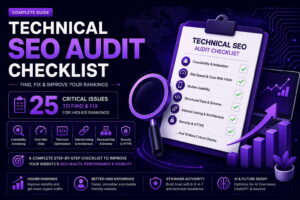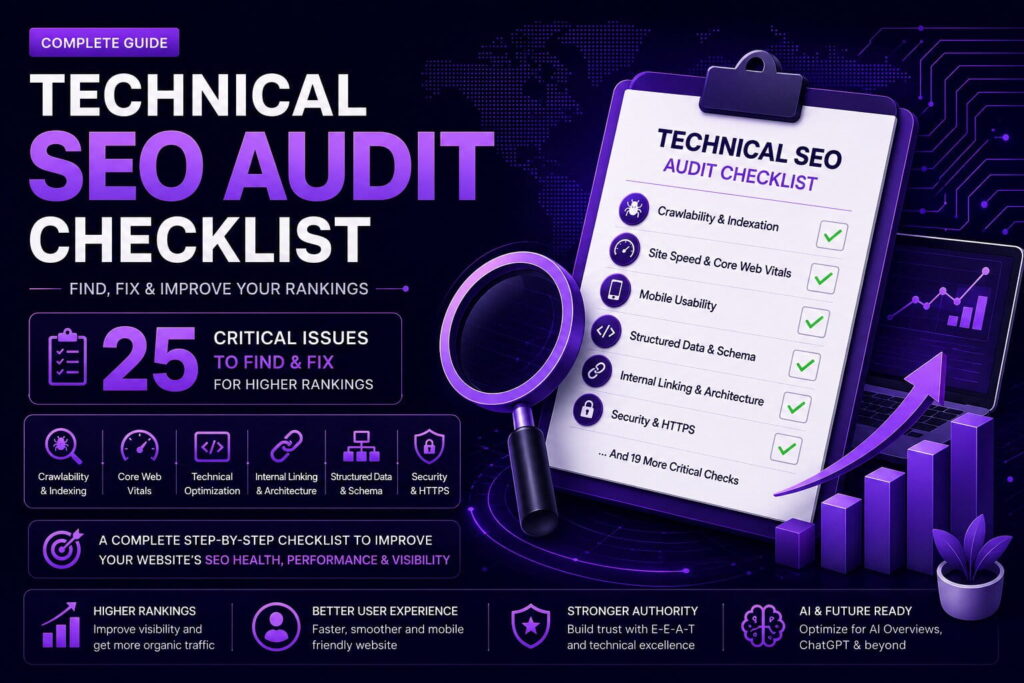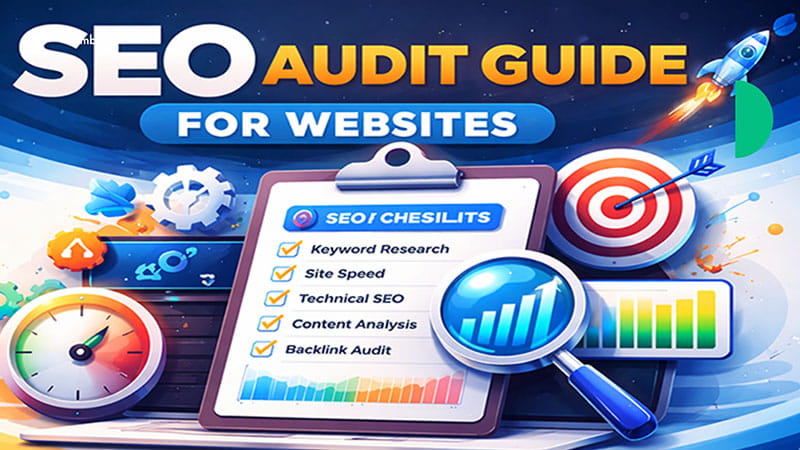
An SEO audit is a complete analysis of a website’s performance in search engines. It identifies technical issues, content gaps, and optimization opportunities to improve rankings, increase traffic, and enhance user experience.
Why Most Small Business Websites Struggle to Rank
Nowadays, just having a website is not enough in the search engine world. Websites have changed dramatically, and ranks depend on technical capability, quality content, user experience, and trust factors.
Most businesses with websites fail not because they don’t work hard enough but because they don’t have an SEO strategy to follow.
They publish content, make occasional updates, and hope for results, not knowing what works or what doesn’t, so there can be no consistent growth.
That is why we need an SEO Audit!
An SEO audit isn’t just a technical aspect. An SEO audit reveals hidden problems, finds opportunities, and provides a roadmap to continued growth.
In this article, you’ll get an overview of what SEO audits actually entail and how to do an SEO audit step-by-step.
Understanding SEO Audits: From Theory to Execution
At its core, an SEO audit is a thorough analysis of your ability to do business on search engines. It will analyze how well your website is doing in communicating with the search engines, as well as how well it is answering the searcher’s intent.
However, the value of an audit comes when it is implemented.
Plenty of guides describe what SEO is, but almost no guides show how to do it in a practical manner. A theoretical audit vs a successful audit is driven action; This is what separates this guide.
Step 1: Establish a Strong Technical Foundation
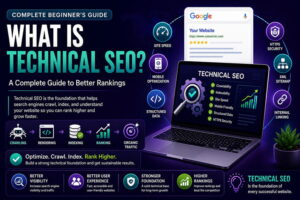
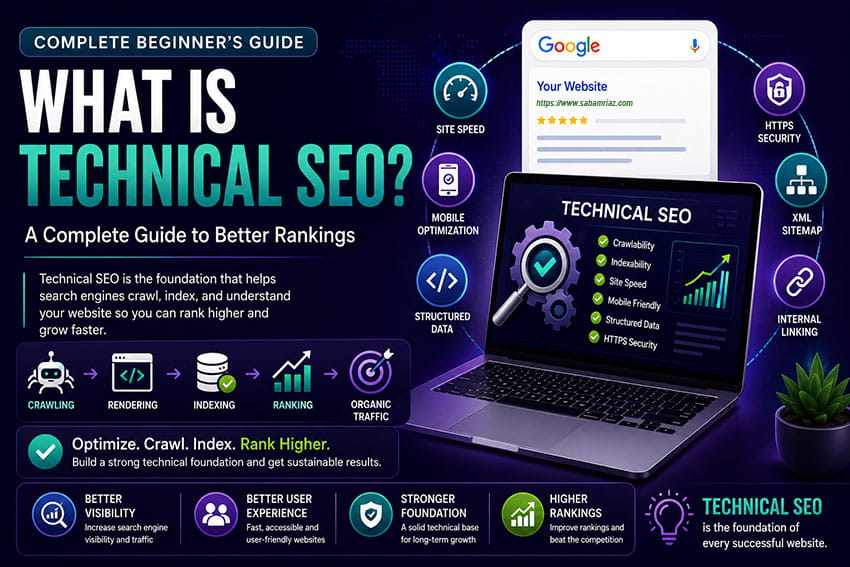
The first step is making sure that, when optimizing content or building authority, your website must be technically sound. Search engines need to access, crawl, and understand your website efficiently.
Then, examine how Google PageSpeed Insights finds your page’s performance. If your website takes longer than a few seconds to load, then this can hurt user experience. Fix by optimizing images, reducing unnecessary code, enabling caching, etc.
Also, check that your website is mobile-friendly and has a secure HTTPS. These are essential, and the website must meet these standards before doing anything else.
This is critical to SEO, a strong technical foundation ensures that every other optimization effort can deliver results.
Step 2: Ensure Proper Indexing and Visibility
If your content isn’t indexed, it won’t show up in search results, no matter how good it is.
To see how your site is doing, use Google Search Console. Look at the Pages or Coverage section to find out which pages are showing up in search results and which ones are not. This will help you figure out what’s going on with your site’s indexing. You can use this information to make changes and improve your site’s visibility.
If you find pages labeled as “Crawled but not indexed” or “Discovered but not indexed,” it indicates a deeper issue related to content quality or site structure.
Resolve this by improving content relevance, submitting important pages for indexing, and ensuring your XML sitemap is properly configured.
This step is critical because it determines whether your website is visible in search results at all.
Step 3: Align Each Page with Clear Search Intent
Once your website is being indexed, you want to ensure that Google and users clearly understand the intent behind each page.
Target specific keyword terms and topics with each of your web pages rather than trying to target multiple keywords for one page.
Clearly write this purpose in your title tags, meta descriptions, and H tags. Then use content that expands upon this topic to satisfy user search intent.
This approach allows search engines to better understand your content while ensuring users find exactly what they are looking for.
Step 4: Upgrade Content Quality for Competitive Advantage
Content quality is now king in SEO, and it shows. Websites that contain the best and most informative content rank the highest.
Assess the content quality of your existing web pages and update those with thin content or outdated material.
Expand shallow pages to address every aspect of the user’s query; The goal is not to produce more content, but to produce better content.
Websites that do this succeed because they serve the user effectively, and in the eyes of the search engine, are far superior to any other.
Step 5: Strengthen Internal Linking and Site Structure
A well-structured website enhances both user experience and search engine understanding.
Optimize the navigation of your website and make it as user-friendly as possible for the user and for the search engines.
Use internal linking to link between relevant pages and spread the ‘authority’ of the pages of your website evenly throughout your site structure.
This allows you to improve the navigation, visibility, and ranking of the important pages on your website.
Step 6: Optimize for Local Search Visibility
For local businesses, optimizing your Google Business Profile is crucial, and if it is fully updated and has high-quality photos, it will increase visibility significantly.
Your ranking will also be directly impacted by how often you respond to customer reviews, so respond often. Make sure your NAP (Name, Address, Phone number) information is accurate across your entire website and on all local listings.
If you are optimized for the terms you target with location data, customers looking for you locally are far more likely to find your business online.
Step 7: Build Authority Through High-Quality Backlinks
Google views backlinks as votes of confidence, which is why they are such a huge part of its algorithm.
Perform a backlink audit, remove or disavow harmful links, and focus on acquiring high-quality backlinks from reputable sources.
This can be through guest blogging, partnerships, and other techniques.
The better your backlink profile, the more authority your website will have and the more it will rank.
Step 8: Enhance User Experience and Engagement
A good user experience makes visitors stay on your website and use your services or buy your products.
Improving layout, reducing friction, and ensuring mobile usability all contribute to a better user experience.
When visitors have a pleasant and easy experience navigating your website, search engines see these positive signals as a sign that your website is valuable and will begin to rank it higher.
Make sure that your website has clear navigation, fast loading times, and readable content.
Step 9: Track Performance and Continuously Optimize
SEO is an ongoing process that requires consistent monitoring and refinement.
Use Google Analytics alongside Google Search Console to track key performance metrics such as traffic, engagement, and keyword rankings.
Analyze trends, identify successful pages, and continuously improve underperforming areas.
This data-driven approach allows you to adapt to changes in search algorithms and maintain long-term growth.
Strategic Insight: Why Most SEO Efforts Fail
One of the most common reasons SEO strategies fail is inconsistency.
Many businesses perform one-time optimizations and expect lasting results. In reality,
The only way to consistently succeed with SEO is through continued performance auditing and constant updating of your strategy.
The businesses that succeed are those that treat SEO as a long-term investment rather than a one-time task.
Wrapping up: Turning Insights into Growth
SEO audits are a comprehensive and informative checklist that you can use to ensure your website is working for you and is fully optimized to perform in search engines.
By integrating technical optimization, high-quality content, a strong internal link structure, and consistently measuring the success of your strategy, small businesses can achieve and sustain their presence in the search engines.
The difference between a website that struggles and one that thrives often comes down to clarity and execution.
Frequently Asked Questions
What is an SEO audit, and why is it important?
An SEO audit is a complete evaluation of a website’s performance in search engines. It helps identify technical issues, content gaps, and optimization opportunities that can improve rankings, traffic, and user experience.
How often should a small business perform an SEO audit?
Small businesses should perform an SEO audit every three to six months. Regular audits ensure that the website stays optimized and adapts to search engine updates.
Can I do an SEO audit without professional tools?
Yes, a basic SEO audit can be done manually, but tools like Google Search Console and Google Analytics provide deeper insights and more accurate data.
What is the most important part of an SEO audit?
Technical SEO and content quality are the most important parts. If your website is slow or your content does not match user intent, rankings will be affected regardless of other efforts.
How long does it take to see results after an SEO audit?
Results can start appearing within a few weeks, but significant improvements usually take one to three months, depending on competition and implementation.