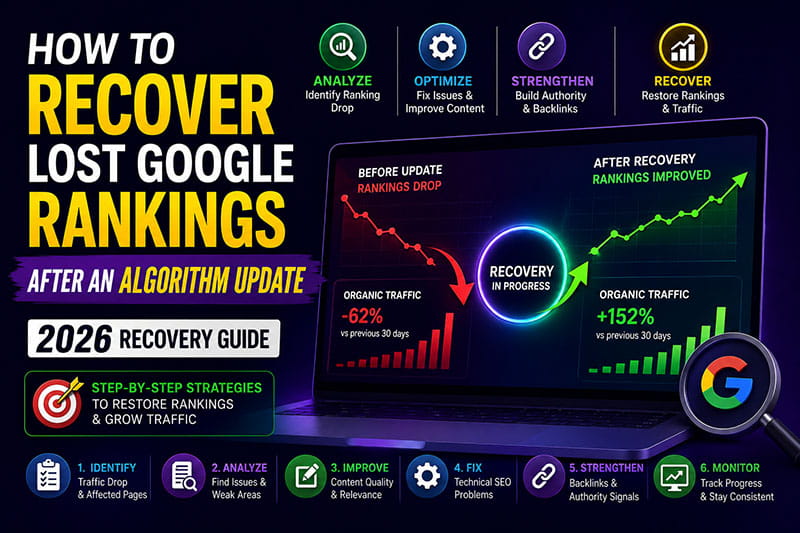
Recovering lost Google rankings after an algorithm update requires identifying affected pages, improving content relevance, fixing technical issues, and strengthening authority signals. Ranking drops often occur when content no longer meets updated search standards. By analyzing performance data and applying structured improvements, websites can gradually restore visibility and maintain stable rankings over time.
Understanding Ranking Loss After Algorithm Updates
Sudden ranking drops are very stressful for website owners, especially if the website traffic starts diminishing without warning. Oftentimes, these drops are due to changes in the search algorithms which are used to evaluate websites. Modern search engines no longer focus on individual ranking factors, rather they measure content quality, technical performance, user engagement, and topical authority together to decide the ranking of a website.
If your rankings dropped following an update, it’s unlikely that the issue was a random one. In fact, a large percentage of the time the main reason for the drop in rankings is that some pages don’t align with the new criteria for relevance, trust, or usability as per the update. Knowing why your rankings suffered is only the beginning of recovery. It is good practice to analyze why your rankings dropped because understanding the common reasons websites fail to rank on Google is a sure way to prevent the same mistakes when recovering your rankings.
understand the common reasons websites fail to rank on Google
Getting back lost rankings is not a piece of cake and requires well-planned analysis and patience. On the other hand, instant solutions result in only a minor and temporary improvement, whereas a recovery tactic which regularly focuses on the gradual up-gradation of web quality and reliability will definitely help in the restoration of long-term online visibility.
How Google Algorithm Updates Affect Rankings
The changes in search algorithms are intended to enhance search precision by recognizing better content and avoiding showing poor content. These changes in the signals for ranking portray some sites to get more attention while others would have a fall in visibility for a short period. When search systems change their set of criteria for judging, even the pages that performed well in ranking earlier might be required to be upgraded to meet the new standards.
Many of the drops in rankings happen because the search engines are changing their mind about how well a page serves the user’s purpose. Content that is shallow, unclear, or irrelevant has less chance of survival when compared to better options within the search results. Modifying content so it meets the expectations of the search more precisely will help mitigate the losses and result in a more stable ranking over time.
The aspect of the technical performance of a page is checked thoroughly during an update as well. Very slow pages, mobile-unfriendly experiences, or issues with the indexing could reduce the accessibility of the page and therefore impact the visibility negatively. Remedying these technical shortcomings will make your site more resistant and perform well even when the conditions of the search change.
Step 1: Identify When the Ranking Drop Started
First of all, recovering from such a situation requires finding out the precise moment rankings started to drop. Recording performance changes can help establish if loss of traffic is due to changes in the search engine algorithm or if the problem actually comes from the website.
Rankings are monitored continuously and are compared with analytics and traffic data for insight and the ability to detect problems before they escalate or until a decision is made.
The recoverer will use such tools to their advantage, as web analytics and web metrics dashboards shed light on user behavior on the site. You can identify whether the decline in rankings is merely temporary or is, in fact, part of a larger trend that is influencing several websites, by aligning the fluctuations in rankings with the time frames of the updates that are known.
Once the timing of the ranking drop is confirmed, the next step is identifying affected pages. This process helps prioritize improvements and prevents unnecessary changes to pages that continue performing well.
Step 2: Analyze Pages That Lost Rankings
After identifying when rankings dropped is only the first step; it is equally crucial to find out which pages lost most of their rankings. While some could have lost their whole visibility, others might have gotten only a slight decrease. Recognizing these scenarios can show you the less strong spots that need fixing and lead you towards your enhancement plans.
Analyzing hit pages also offers a chance for website owners to assess content quality, keyword appropriateness, and user engagement indicators. In most cases, a page losing its rankings drastically is because it does not serve the purpose of the search well. To update one of these pages, one has to do more research on the subject and provide explanations that are more in line with what users want to see.
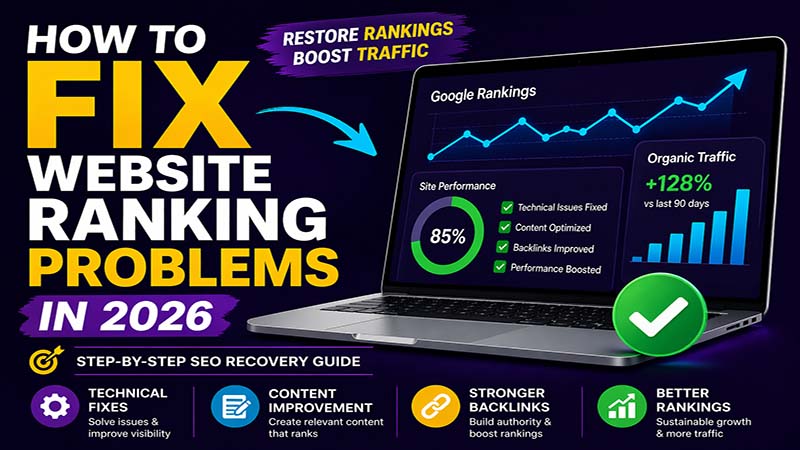
Here, most site owners start implementing remedial measures. If you want a set of guided actions to regain visibility, you can refer to our comprehensive How to Fix Website Ranking Problems step-by-step guide, which details the process of how to fix website ranking issues related to technical and content matters.
Step 3: Improve Content Quality After Algorithm Updates
Content quality is one of the major areas getting hit the hardest by an algorithm change. Together with the search engines are keenly focusing on webpages that give well-structured, precise, and relevant information to the readers. In case of a drop in rankings, checking the existing contents can help in locating outdated information, shallow explanations, or missing contexts, which may be the reasons for the lower visibility.
Enhancing content quality primarily means aligning each webpage to a definite user goal. Those pages that in a detailed way respond to particular questions are more likely to recover their visibility through the help of the search engines. The lengthening of explanations, the introduction of helpful examples, as well as the layout of the ideas in a logical sequence are the methods that give the readers the content that they are looking for.
Last but not least, refreshed content is an efficient way of bouncing back. Information is gradually becoming less relevant as industry norms and search behaviors are evolving. Updating the figures, storyline rewriting, and additional information help in proving the reliability of the content, which eventually leads to better competitiveness. Regularly updated valuable content is the sign of a website which most probably earns visibility after ranking disruptions.
Making content easier to comprehend is a way to better user interaction. Since with little effort the visitors comprehend the information, they are inclined to staying longer on the pages. This signals the usefulness of the pages to the search engines. This further engagement helps to regain the ranking and, over time, to get the confidence of the users.
Step 4: Fix Technical SEO Issues That Affect Visibility
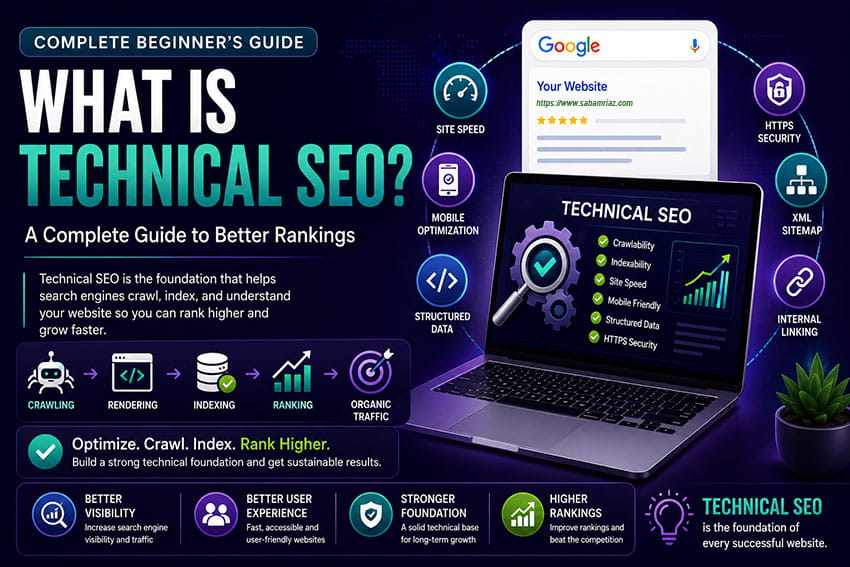
One of the deciding factors for a site’s ranking is the technical effectiveness, especially after the release of the big Google updates. A website with excellent content still might not get good results if technical issues hinder the search engine from indexing or comprehending the pages of the website properly. So, finding and addressing these problems will make your website a more dependable one in general.
Typical technical problems are slow loading times, indexing mistakes, and mobile usability issues. It is known that most of the times pages load speed is what does not satisfy users, and consequently, visitor count to the pages decreases, and this is something that impacts a website’s ranking directly. Compressing images, eliminating unnecessary scripts, and increasing server response times are some of the factors that help get a speedy browsing experience for users.
Another vital factor is how well your site works on mobile devices. Since the majority of the web users open sites on their phones, having a site design that is compatible with all types of screen sizes safety helps maintain the user experience. Websites that are easy to access and view on different devices offer better usability and user satisfaction, which indirectly signals a stronger ranking.
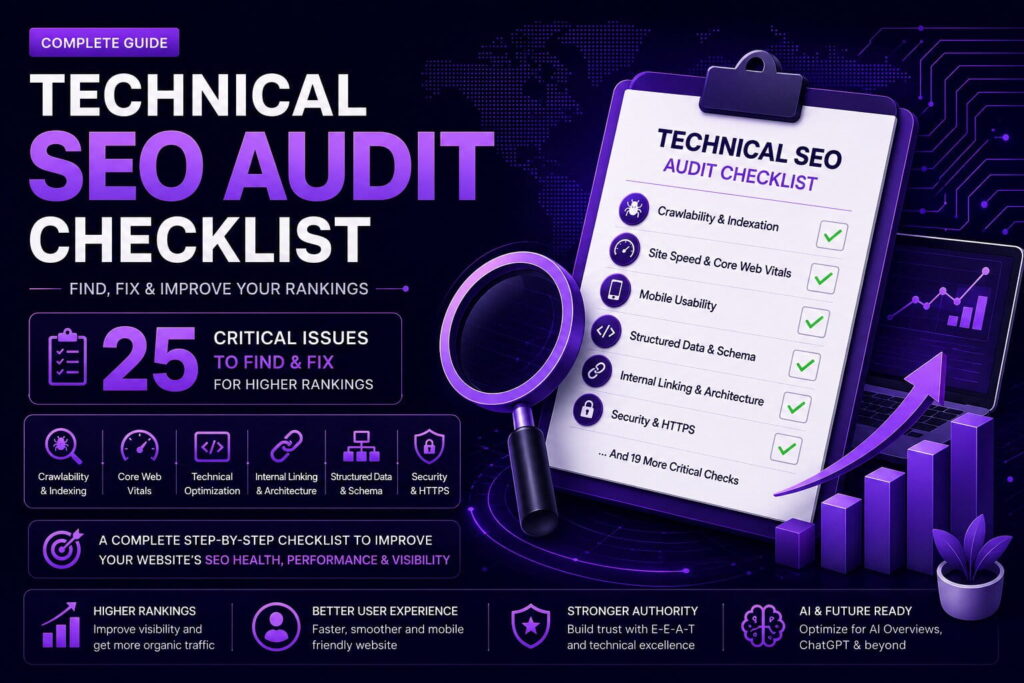
Fixing problems in indexing is also important. In case search engines have trouble understanding or crawling your pages, your content can be hidden from search results. Technical audits are necessary so that we can spot such errors and avoid loss of visibility for an extended period.
Step 5: Strengthen Authority Signals and Backlink Quality
Authority signals have a huge impact on whether or not pages bounce back after ranking changes. Search engines measure the trustworthiness of a piece of content through its references from other reliable sources. When major websites link to your pages, it indicates a certain level of trust in your content, and it raises the perception of reliability.
Developing authority is more about quality than quantity. A few relevant backlinks from authoritative sites will give you much more value than a heap of low-quality citations. Delivering helpful content, making research-based articles, and writing comprehensive guides are some of the ways to get natural backlinks over time.
Internal linking is yet another way to foster authority. Linking up one article with another helps search engines figure out the connections between different pages, and it also enhances the topical structure. Besides, it benefits the user’s experience by improving the site navigation and leading to more extended browsing sessions, which is a measure of engagement.
It is a fact that authority is not something that you can achieve once and then not think about it. Besides disavowing or removing bad links, regular efforts should involve looking at the backlink profile, finding the ones that have gone stale, and linking to more current resources.
Step 6: Monitor Recovery Progress and Adjust Strategy
Regaining lost rankings rarely happens overnight. Updates are generally slowly recognized by search engines as they re-evaluate the refreshed content and technical changes made. Keeping an eye on performance indicators is helpful not only for tracking the progress but also for determining if the implemented strategies for recovery are effective.
Checking performance regularly is a way to spot trends that can either signify improvement or further decline. Monitoring changes in website traffic, keyword rankings, and user interaction are among the metrics that help tailor recovery measures. Improvement in certain pages might lead to only slight modifications, whereas underperforming pages may call for more extensive changes.
Besides, long-term tracking is an excellent method to guard against future drops in rankings. It is by regularly analyzing the trends that one can get a glimpse of these warning signals early enough and be able to react to the challenges promptly. What follows is the continuous vigilance supporting the overall well-being of the site and minimizing the occurrences of sudden drops in visibility.
Definitely, patience is an important element in the equation of getting back on one’s feet. Quite often, sites that dedicate themselves to gradual progress over drastic changes are the ones that establish robust structures and enjoy relatively stable rankings in the course of time.
Frequently Asked Questions (FAQ)
How long does it take to recover lost Google rankings after an algorithm update?
Recovering lost Google rankings usually takes several weeks to a few months, depending on the severity of the issues affecting your website. Improvements in content quality, technical performance, and authority signals help search systems reassess your pages gradually. Websites that apply consistent optimization strategies often experience steady recovery over time.
Why do rankings drop after a Google algorithm update?
Rankings often drop after algorithm updates because search systems adjust how they evaluate content relevance, technical performance, and user experience. Pages that no longer meet updated quality standards may lose visibility. Improving content accuracy, usability, and trust signals helps restore performance and supports long-term stability.
What should I do first after noticing a ranking drop?
The first step is identifying when the ranking drop started and which pages were affected. Reviewing traffic patterns helps determine whether the decline is linked to an algorithm update or internal website issues. Understanding the cause allows website owners to focus on targeted improvements rather than making unnecessary changes.
Can updating content help recover lost rankings?
Updating content can significantly help recover lost rankings, especially when information becomes outdated or incomplete. Adding accurate details, expanding explanations, and improving structure increases relevance. Fresh, well-organized content sends positive signals that support recovery and improve long-term search visibility.
Do technical SEO problems affect ranking recovery?
Yes, technical SEO problems can slow down ranking recovery if search engines cannot properly access or evaluate website content. Issues such as slow page speed, indexing errors, and mobile usability problems reduce performance reliability. Fixing these issues strengthens technical foundations and supports faster recovery progress.
Is backlink quality important after algorithm updates?
Backlink quality remains important because references from trusted websites improve credibility and authority signals. When reputable sources link to your pages, search engines interpret this as evidence of trust. Maintaining high-quality backlinks helps support ranking recovery and strengthens long-term visibility.
Wrapping up: Building Long-Term Stability After Algorithm Updates
Once an algorithm update causes a loss in rankings, the best way to get them back is to work step by step and keep things balanced. The best recovery strategies involve a mix of upgrading content quality, doing technical optimization, and building up authority. These parts complement each other in bringing back visibility and also in reinforcing performance over time.
Being consistent is still one of the major elements in recovery. Those websites that continuously update their pages, keep track of performance, and slowly enhance content are the ones who manage to adjust to the ever-changing search environments. So, by concentrating on making improvements that can be sustained over time rather than going for quick fixes, websites essentially make themselves less vulnerable to future ranking changes.
When technical dependability, informative content, and reliable authority cues are combined, long-term ranking stability is the result. With a bit of patience and ongoing polishing, large numbers of websites have the potential to recover their exposure and keep their competitive positions even after major algorithm modifications.