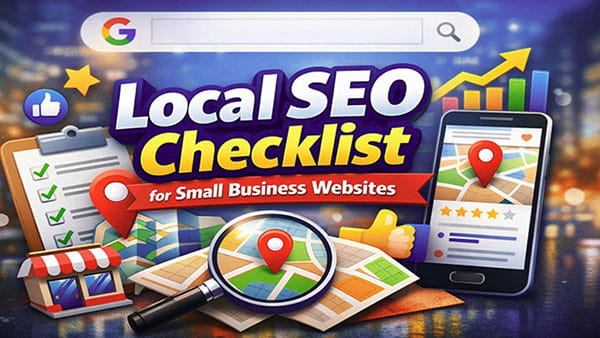
A Local SEO checklist helps small businesses improve visibility in local search results by optimizing Google Business Profile, maintaining consistent NAP details, targeting local keywords, managing reviews, and improving website performance to attract nearby customers and increase conversions.
These days, local SEO is a must-have for small businesses. With more people using search engines to find local services, showing up in search results is no longer a choice – it’s necessary for any business that wants to succeed. When people search for things like “SEO expert near me” or “website design in my city”, search engines give priority to businesses that are clearly local, trustworthy, and authoritative.
This checklist for local SEO is like a map to help you optimize your website so it shows up higher in local search results. If you follow each step, you can increase your visibility on Google Maps, get more people visiting your website, attract local customers who are really interested in what you offer, and get consistent leads. It’s a simple but powerful way to grow your business and reach new customers in your area.
What Is Local SEO Checklist?
To get your business seen in local search results, you need to follow a set of steps. This is called a local SEO checklist. It helps you optimize your Google Business Profile, makes sure your business info is correct everywhere online, targets keywords people use when searching locally, manages customer reviews, and improves your website’s performance.
By following this checklist, you can make sure search engines like Google understand where your business is, what you do, and why you’re relevant to people searching in your area. This way, you won’t miss any chances to improve your local search rankings and can keep growing your online presence over time.
Optimize Your Google Business Profile
To get the most out of local search engine optimization, you need to make sure your Google Business Profile is set up correctly. This profile is like a central hub for all the information about your business that people can find when they search online. It’s really important for helping your business show up on maps and in local search results.
When you’re setting up your profile, make sure you get all the basics right. This includes your business name, address, and phone number. You should also choose the right categories for your business, so people can easily find you when they’re looking for what you offer. Adding some high-quality photos and a description of your business that really captures what you do can also make a big difference. And don’t forget to keep your profile fresh by posting updates regularly – this shows that your business is active and trustworthy.
If you keep your profile optimized and up-to-date, you’ll be more likely to show up in the top local search results, which can really boost your visibility and attract more customers. This is often called the Local 3-Pack, and it’s a great spot to be if you want to get more clicks and engagement from potential customers.
Maintain NAP Consistency Across All Platforms
When it comes to search engines, having consistent business information is really important. This is often called NAP consistency, which stands for Name, Address, and Phone number. It’s like a trust signal that tells search engines your business is legitimate. Inconsistent information creates confusion for both users and search engines, reducing your chances of ranking well in local results. This can hurt your chances of showing up in local search results. But, if you make sure every listing is exactly the same, it strengthens your authority and helps search engines feel confident about showing your business to potential customers.
Target Local Keywords Strategically
To connect with customers in your area, you need to use local keywords in your online content. Instead of using broad keywords that could apply to anyone, anywhere, focus on keywords that include your city, area, or the region where you offer your services.
Naturally using these local keywords on your website, in headings, meta tags, and URLs, helps search engines understand where you are and what you do. Semantic variations of keywords further enhance your content by aligning it with user intent and AI-driven search systems.
Create Location-Specific Landing Pages
When you’re running a business that operates in multiple areas, it’s really important to create separate landing pages for each location. These pages should have unique content that’s focused on the specific services you offer in that area. Think about including local references, customer testimonials, and details about your services – this helps make your content more relevant and engaging for users. It’s also crucial to avoid copying content across different pages, as this can harm your search engine optimization (SEO) performance. Instead, make sure each page provides value that’s tailored to its specific audience.
For instance, if you have a business with locations in New York and Los Angeles, your landing page for New York should have content that’s unique to that area, such as local customer testimonials or information about your services in that region.
Optimize Website for Mobile and Speed
These days, most people use their smartphones to search for local businesses, so having a website that’s optimized for mobile devices is essential for local SEO. A responsive website that works well on different screen sizes can greatly improve the user experience and keep people engaged. Plus, when your website is easy to navigate on a smartphone, it’s more likely to show up in search results.
The speed of your website is also vital for rankings. If your pages load quickly, you’ll have lower bounce rates and higher user satisfaction. To achieve this, you can optimize your images, get rid of any unnecessary scripts, and improve your Core Web Vitals. All these tweaks contribute to better performance and can even boost your rankings.
By focusing on mobile optimization and speed, you can create a website that not only looks great but also provides a seamless experience for your users, no matter where they are or what device they’re using.
Collect and Manage Customer Reviews
Among the strongest indicators of trust and credibility in local SEO are customer reviews. Companies that consistently receive positive reviews tend to get higher positions in search results and draw more clients.
Inviting happy customers to write a review and replying to them in a professional manner shows that the business is active and dependable. Besides affecting the rankings in the search engines, reviews also play a role in the customer’s buying decision, which is why they are crucial for continuing success.
Build Local Citations and Listings
Local citations refer to instances when a business is mentioned on various directories and websites alongside their NAP (Name, Address, Phone number) details. Besides aiding search engines in confirming the existence of your business, these citations also assist in boosting your local authority.
Enhancing one’s credibility happens when the business is listed in reliable directories, and the details about the business remain constant in all the listings. Besides that, good citations are linked with higher rankings and more chances to be found in local search results.
Implement Local Business Schema Markup
Schema markup enables search engines to comprehend detailed information about your business in a structured way. When you add the Local Business schema, you share accurate information about your address, what services you offer, how to contact you, and your business hours.
This type of structured data may lead to your business showing up more in rich snippets and makes your business more visible through AI-powered searches. Adding schema is like an extra step of SEO that not only helps in rankings but also makes the site more enjoyable for users.
Improve Internal Linking Structure
When you link different pages on your website, it helps search engines see how your content is related. For example, if you have a checklist for Local SEO, you can link it to other articles about on-page SEO, technical SEO, and content strategy. This creates a strong group of related content clusters.
This makes it easier for search engines to crawl your site, spreads authority across pages, and helps with topical relevance. A good internal linking strategy can lead to higher rankings and make it easier for users to navigate your site.
Build High-Quality Local Backlinks
Backlinks from trustworthy and authoritative websites tell search engines that you’re credible. Local backlinks, in particular, show that you’re connected to a specific geographic area.
If you can get backlinks through partnerships, guest posts, and local collaborations, it will improve your authority and increase your chances of ranking higher in local search results. Remember, it’s not about how many backlinks you have, but how good they are.
Monitor Performance and Continuously Optimize
Local SEO is an ongoing thing, not something you do once and forget. You need to keep an eye on how you’re doing to see what’s working and what needs to be improved.
Analyzing metrics such as how visible you are in search, how many clicks and calls you get, and how users behave on your site helps you make your approach better. If you keep optimizing, you can stay competitive and adjust to changes in how search engines work.
Why This Local SEO Checklist Matters in 2026
In 2026, search engines are really focused on what users want, the structure of your data, and how engaged people are with your content to decide how to rank businesses. Having a complete Local SEO checklist makes sure you’ve got all the important stuff covered, from how your site works technically to how relevant and trustworthy your content is. If you follow a structured plan, you’ll have an edge over the competition – you’ll show up more in search results, get more leads that are actually interested in what you offer, and build a reputation that lasts.
This checklist gives you a strategy that can grow with you and help you stay visible over time. You can use it to make sure your business is set up for success in the long run, and that you’re doing everything you can to reach new customers and stay ahead of the curve. By focusing on the things that really matter, you can make your Local SEO efforts more effective and get the results you’re looking for.
Wrapping up
A well-executed Local SEO checklist is essential for small businesses aiming to dominate their local market. By optimizing your Google Business Profile, maintaining NAP consistency, targeting local keywords, managing reviews, and improving website performance, you create a strong foundation for sustainable growth.
Local SEO is not just about rankings; it is about connecting with the right audience at the right time. By implementing these strategies consistently, your business can increase visibility, build trust, and generate more leads from local search results in 2026 and beyond.